Malpensa: First Hydrogen Truck Arrives at Cargo City
Hydrogen Used for the First Time in Airport Logistics Operations
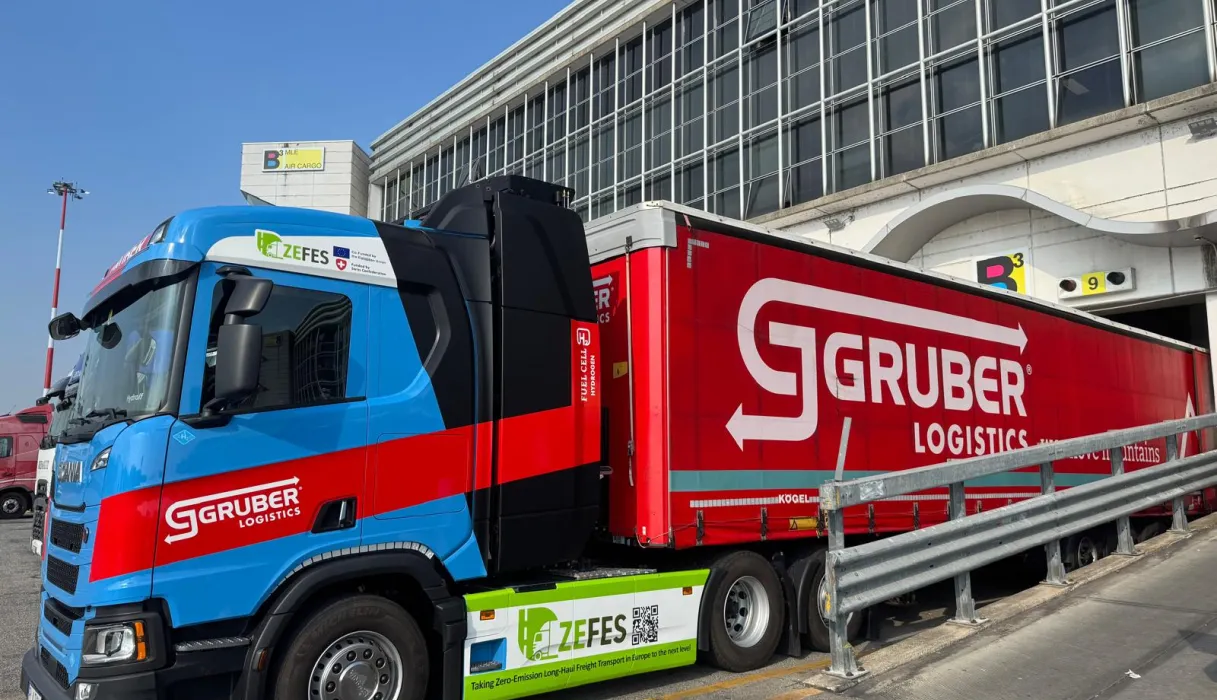
A hydrogen-powered truck has entered Pass4Core, the secure parking facility at Malpensa Airport’s Cargo City, while awaiting delivery of goods to airport operators.
This is what took place at Milano Malpensa, where Gruber Logistics deployed a hydrogen fuel-cell truck to make deliveries to the handlers BCUBE AIR CARGO and ALHA.
This was not simply a technology demonstration, but an operation integrated into the regular flow of airport logistics. The vehicle transported goods and carried out the related deliveries within Cargo City, integrating with the airport’s operational and digital processes through the Smart City workflows used to manage shipments and deliveries.
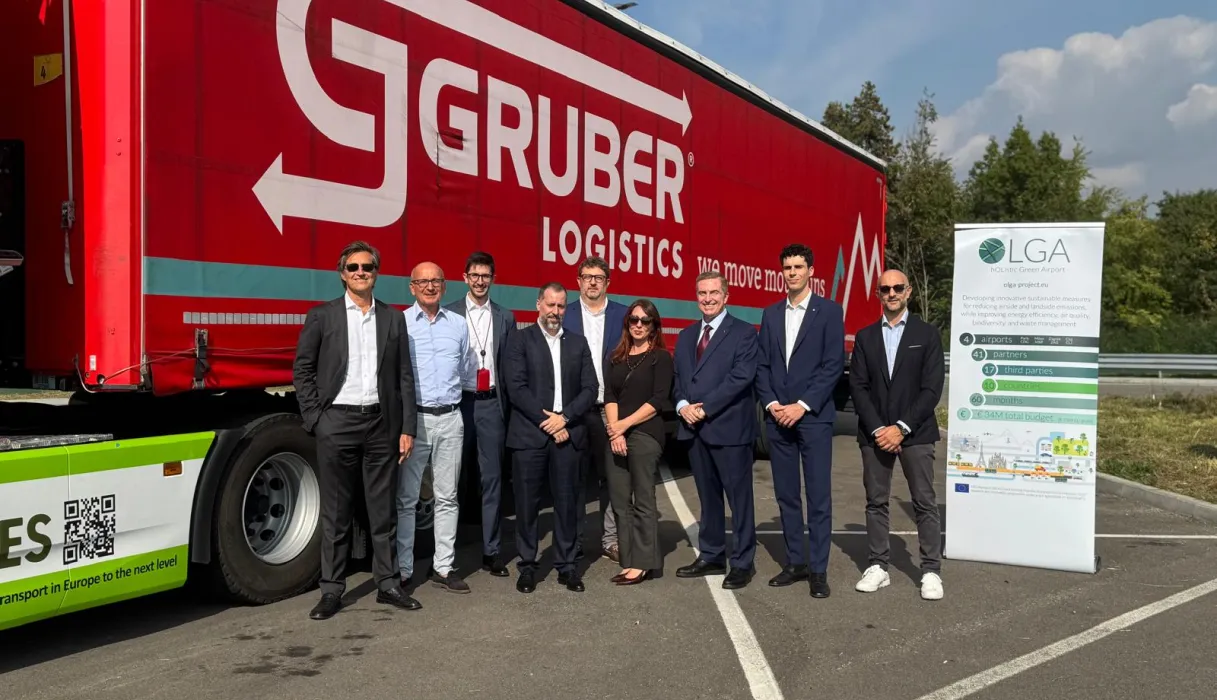
The initiative was carried out by Gruber Logistics with the support of SEA Milan Airports and Edison, and represents a further step in testing hydrogen solutions for mobility and airport logistics at Malpensa.
A Hydrogen Truck at the Heart of Cargo City
Bringing a heavy-duty hydrogen-powered vehicle into Cargo City means testing the technology not only on the road, but directly in a complex operational environment, where delivery times, access, cargo handling and coordination between different operators must be seamlessly integrated without disrupting normal airport processes.
This is precisely the key element of the trial: assessing the use of hydrogen in a real logistics operation, putting the technology to the test under the operating conditions of a major international airport. The Malpensa experience also stems from the convergence of several European projects focused on transport decarbonisation.
From Road Transport to Airport Logistics
Gruber Logistics is involved, together with Scania, in the European ZEFES – Zero Emission flexible vehicle platforms with modular powertrains serving the long-haul Freight Eco System project. As part of the project, the company is testing a hydrogen-powered fuel-cell heavy-duty vehicle for long-haul transport under real operating conditions.
The truck used at Malpensa therefore brings the experience gained in road transport into a new context: airport logistics. This step makes it possible to connect trials developed in different fields and assess how hydrogen technologies can be integrated into different logistics supply chains.
Malpensa Looks to Hydrogen
The operation is part of a broader project aimed at developing a hydrogen ecosystem at Malpensa. As part of this initiative, Edison is developing a project for a green hydrogen production and distribution hub at the airport, close to the Malpensa Truck SafePark.
The objective is to create, in the future, an infrastructure capable of producing hydrogen on site and supplying vehicles involved in airport-related operations. The availability of a refuelling point directly within the airport area could therefore encourage the use of hydrogen-powered vehicles for transport and logistics services connected to the airport, progressively strengthening the integration between energy infrastructure and mobility.
Hydrogen mobility is zero-emission and can significantly reduce emissions, enabling the Lombardy airport to take a fundamental step towards its “Net Zero” target by 2030.
This represents a concrete step forward: even before the infrastructure becomes available, hydrogen is already being tested in real Cargo City operations, building experience and expertise ahead of its potential wider deployment.
SEA and the European OLGA Project
The trial is part of the European OLGA (hOListic Green Airport) project, an initiative funded by the European Union’s Horizon 2020 programme and aimed at accelerating the decarbonisation of the airport sector through innovative solutions in energy, sustainable mobility and airport operations.
SEA Milan Airports is participating in the project, playing a role in activities focused on energy and hydrogen and working on the development and testing of solutions for hydrogen production, refuelling and use at Milano Malpensa.
The hydrogen truck trial at Cargo City therefore brings the experimentation directly into the field: from technology to vehicle, from refuelling to airport processes, with the aim of practically assessing how hydrogen can become part of the different links in the airport’s logistics chain.